
In 2020 India was compelled by China to change its national security strategy. From counter-insurgency, which the army has been focussed on for years, we shifted to conventional war, observes Aakar Patel.

K Pandia Rajan, an expert on the employment scene and recruiting speaks on the buoyancy in the Indian economy and what youngsters can look forward to.
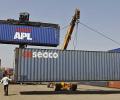
With exporters' claim for over five months still pending, liquidity has been wiped out and the process of finalising new contracts has been held up.

Would Ukraine be such a pushover if it had that nuclear stockpile?' asks Shekhar Gupta.

The reduction of tension on the Chinese border may have reduced the urgency of a Biden-Modi meeting, but the sooner Modi starts a bromance with Biden the better as he had done with Obama and Trump, suggests Ambassador T P Sreenivasan.

'In India foreign policy is generally handled by the prime minister.' 'One can clearly see the Vajpayee stamp on all this.' 'Only a person with poetic imagination can weave such a complex web,' says Colonel Anil A Athale (retd).
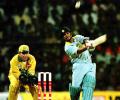
'Now, we have very different setting including changes in rules with two new balls and the fielding restrictions are very different. But ODI fever started in the 1990s. On-field noticeable changes, early to mid 90s was okay, but from 1996 things changed at rapid pace.'

'The potential of one such LAC engagement going out of control and leading to heavy casualties cannot be ruled out,' warns Lieutenant General Syed Ata Hasnain (retd).

At a time when China is trying to make its foray into South Asia, India should use its shared history to strengthen its ties in the region, says Dr Rup Narayan Das.

Unlike in the presidential polls, victory might not have been complete, at least as yet, for Mahinda Rajapaksa's electoral rivals. While his one-time aide and confidant, Maithripala Sirisena, became president without any issues after defeating him, incumbent Prime Minister Ranil Wickremesinghe, who again may not command an absolute majority in the 225-member parliament, would have to count on his 'national government' concept to carry the day and the nation with him, this time round, says N Sathiya Moorthy.
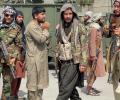
'Imagine China pursuing its aims in Jammu and Kashmir by using Pakistani and now Afghan proxies.'
Addressing the UNSC High Level Open Debate on 'Peacebuilding and sustaining peace: Diversity, state building and the search for peace', Muraleedharan said the expectations of the international community on Afghanistan, including on combating terrorism, are set out clearly in the UN Security Council Resolution 2593, that was adopted under India's Presidency of the 15-nation Council in August.

'The real challenge cannot be underestimated considering that this is still very much a "boutique relationship" -- a transactional relationship at its core based on its utility value to both countries -- but enveloped in an aura of romance,' says Ambassador M K Bhadrakumar.

ISI chief Faiz Hameed coerced the Taliban to announce an interim government guaranteed to preserve Pakistan's control over the levers of power in Kabul, observes Ambassador M K Bhadrakumar.

'The travesty of recent Indian strategic thought is it emerges not from our brains, but from whatever part of the anatomy that secretes the prickliest hormones,' says Shekhar Gupta.

Pakistan is once again becoming a frontline State in big-power rivalry. But this time around, Pakistan stands to gain out of its geography, observes Ambassador M K Bhadrakumar.
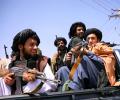
A full-fledged training, intelligence and combat module on Taliban, its leadership and their modus operandi is being prepared apart from specific case studies that have taken place in that country and the region, he said.

A 'soft' approach must be nurtured to complement the hard-line of spending billions in physical conflict; that is the only way to 'degrade and destroy' ISIS.

'China's growing nexus with Pakistan and the two countries' unresolved territorial disputes with India continue to pose a formidable national security threat to India,' says Brigadier Gurmeet Kanwal (retd).

'India is possibly the most fiscally constrained market in the region.'

'The parallels between 1914 and 2014 are striking. The crumbling of American and Russian hegemony, the rise of powerful terrorist groups, ferment in the Middle East and the rise of China... These closely mirror the world of 1914,' says Colonel Anil A Athale (retd).
'The response to terror is not always reciprocal terror, nor is launching a conventional response the best response.' 'The best response is to make the sponsor pay a price he cannot afford,' says former RA&W chief Vikram Sood.

'Pakistan is paying the price for ignoring secularism. In seeking to be ever more Muslim to define its nationhood, it has become a terrorist haven.'

Decommissioned aircraft carrier INS Vikrant's voyage came to an end on Friday as workers at the Darukhana ship-breaking yard in Mazgaon docks in Mumbai began scrapping down the warship.
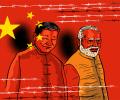
'It is time we Indians stop our internal bickering and present a united front to Chinese machinations,' advises Colonel Anil A Athale (retd).
The Left parties attacked the government's policies and said the country was heading towards an economic emergency.
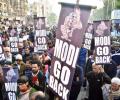
'Whatever the legal position, it is my understanding that in practice, the Indian authorities have always treated Hindu refugees from Pakistan and Bangladesh far more sympathetically than Muslims,' notes Sunanda K Datta-Ray.

10 takeaways from the prime minister's UN speech.

'Notwithstanding the realisation among the Indian leadership to build up its navy for the force's expanding role, the Indian Navy was allocated only 15% of the interim defence budget presented in Parliament in February 2019.' 'The outlay for the navy's capital acquisition is not even adequate to meet its committed liabilities,' points out Brigadier S K Chatterji (retd).
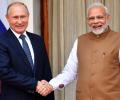
'Washington senses that the anchor sheet of India's strategic autonomy lies in its longstanding partnership with Russia, which remains firm and immutable despite the changes in world politics in the post-Cold War era,' notes Ambassador M K Bhadrakumar.<

'With technology advancing rapidly, the need for branches is declining.'

Historically, tensions in West Asian regions have provided support to gold prices.
